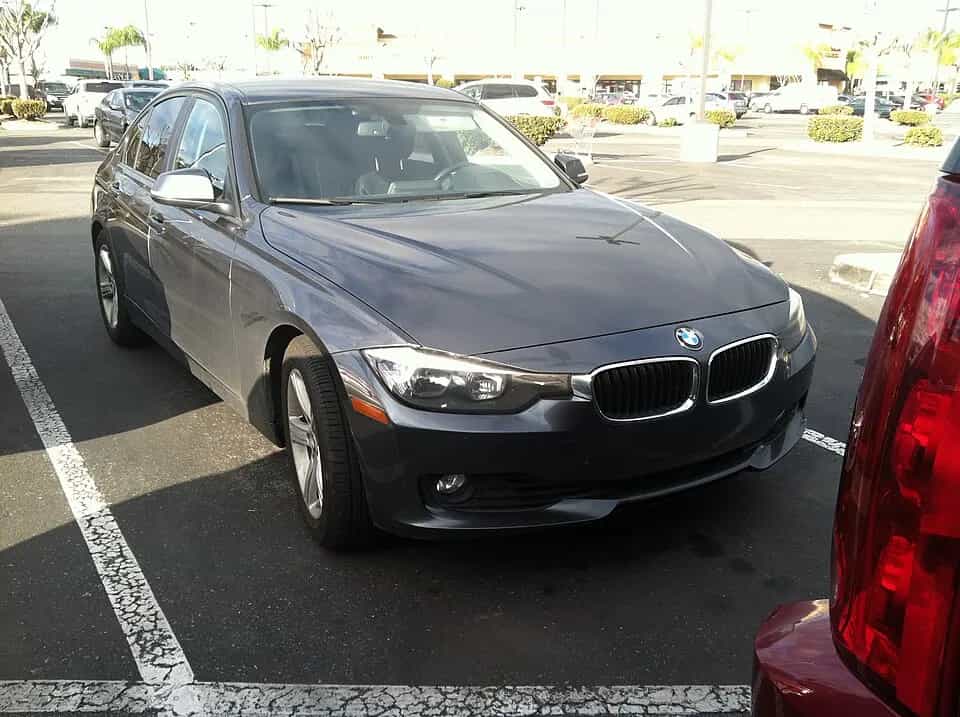
BMW 3 Series
Importing a used BMW 3 Series from the USA
The 3 Series is the car that built BMW's reputation, and the American market has bought it in enormous numbers for decades. That volume is exactly why importing a used BMW 3 Series from the USA can be worthwhile: deep supply, strong xDrive availability, and desirable engine-and-trim combinations that turn up more often than in Germany. USCar Trader acts as your independent broker for the whole process — we do not sell new cars and we do not add a margin to the vehicle price.

From launch to today
Across generations the relevant ones for US imports are the E90/E92 (2006–2013), the F30/F31/F34 (2012–2019) and the G20/G21 (2019 onward). The F30 marked the switch to turbocharged four- and six-cylinder engines and electric power steering; the G20 sharpened the chassis, adopted the latest iDrive, and received an LCI facelift for 2023 with the enlarged grille and curved display. In the US the 3 Series is overwhelmingly a saloon; the Touring estate is far rarer stateside, so most imported cars are sedans.
Engines and drivetrain in detail
Modern US 3 Series cars centre on the 330i, powered by the B48 2.0-litre turbo four (around 248 hp), and the M340i, powered by the B58 3.0-litre turbo straight-six (roughly 382 hp with the 48-volt mild-hybrid on later cars). Earlier F30 cars offered the 328i (N20/N26 2.0 turbo) and the 335i/340i with the N55 and later B58 six. The plug-in 330e adds an electric motor to the B48. Transmissions are almost always the ZF 8-speed automatic, and xDrive all-wheel drive is common — a genuine draw for buyers who want the six-cylinder M340i xDrive.
Trim levels and variants
US trims run through Sport Line, Luxury Line and M Sport, with popular options such as the Premium Package, Harman Kardon audio, adaptive M suspension, head-up display and the Driving Assistance packages. M Sport cars with the six-cylinder engine are especially sought after. Because leasing dominates the US market, many three-year-old cars are well specified and well maintained.
Used availability in the USA
Availability is excellent. Off-lease 330i and M340i xDrive cars appear constantly, typically at 30,000–90,000 km (converted from miles) with clean service records. Cars from California, Texas, Arizona and the Southeast are usually rust-free. As always, read the Carfax or AutoCheck record for accidents and title status before you commit.
When importing makes sense
A used BMW 3 Series import from the USA makes sense if you want a straight-six M340i xDrive at used value, a specific colour and options mix, or simply a clean, well-documented example from a dry climate. Buyers set on the Touring estate should note it is scarce in America; the saloon is the natural US import.
Facts and figures
| Attribute | Typical US-market figures (G20) |
|---|---|
| Body style | 4-door saloon (Touring rare in US) |
| Generations imported | E90 (2006–13), F30 (2012–19), G20 (2019+) |
| 330i engine | 2.0 L B48 turbo I4, ~248 hp |
| M340i engine | 3.0 L B58 turbo I6, ~382 hp |
| 330e engine | 2.0 L I4 + e-motor plug-in hybrid |
| Transmission | ZF 8-speed automatic |
| Drive | Rear-wheel or xDrive AWD |
| 0–100 km/h | ~5.9 s (330i) / ~4.4 s (M340i xDrive) |
| Length | ~4,710 mm |
| Wheelbase | ~2,850 mm |
| Kerb weight | ~1,570–1,720 kg |
| Fuel tank | ~59 L |
| Seating | 5 |
| Fuel | Premium petrol (plug-in on 330e) |
| Top speed | ~250 km/h (limited) |
Reliability and common problems
The 3 Series is broadly dependable, but each engine has known weak points. Early N20/N26 fours (328i) had timing-chain and guide wear on high-mileage cars — a documented failure worth checking service records for. The current B48 four and B58 six are stronger; on both, keep an eye on the electric water pump, thermostat, oil-filter housing gaskets and valve-cover gaskets, which are common oil-leak sources across modern BMWs. VANOS and charge-pipe issues appear occasionally, and the plastic cooling components are wear items. High-pressure fuel pumps troubled some earlier turbo cars. For a used BMW 3 Series, a car with full history and recent cooling-system service is a safer buy than the cheapest example.
How US versions differ
US cars have amber front side-marker lights, headlights aimed for right-hand traffic, usually no rear fog lamp, and the speedometer set to MPH. Navigation maps and radio bands are US-spec. All of these are addressed during German type approval. Mechanically the car is identical to the European version, which keeps parts and servicing straightforward.
From US purchase to registration
Select the exact car and confirm its specification; run a VIN and origin check to establish the build plant; agree terms through secure escrow; book ocean freight to a European port such as Bremerhaven; clear German customs; present the car for TÜV and, where required, individual approval (Einzelabnahme); then register at your local Zulassungsstelle. USCar Trader manages each step on your behalf.
Costs, duty and taxes at a glance
Bottom line: what matters is the factory shown by the VIN – proven US origin unlocks 0% duty. The 19% import VAT always applies.
Two charges are separate. The import duty: the 0% preferential EU rate under Regulations (EU) 2026/1455 and 2026/1461 (in force since 1 July 2026 for directly transported goods, until 31 December 2029) applies only where US origin is proven by the VIN and plant. Many US 3 Series are built in Germany (Munich/Regensburg), while some sedans have been built in San Luis Potosí, Mexico — neither is US origin, so the rate must be checked per VIN and we never promise 0%. The 19% German import VAT (Einfuhrumsatzsteuer) always applies on the customs value.
TÜV, approval and license plates
Typical modifications for approval: fitting a rear fog lamp, adjusting or replacing headlights for right-hand traffic, switching the display to km/h, and documenting the odometer conversion from miles. A COC eases registration where available; otherwise the Einzelabnahme creates the paperwork the Zulassungsstelle needs. Wheel and tyre approvals are verified against the vehicle documents.
Pre-purchase checklist
Match the VIN to the build data and plant. Pull the full Carfax or AutoCheck history for accidents and title brands. Inspect for corrosion under cars from northern, salt-belt states. Confirm complete service records, with attention to cooling-system and (on older fours) timing-chain history. Check for oil leaks at the housing and valve-cover gaskets. Confirm a clean, transferable title. Commission a pre-purchase inspection before releasing escrow funds.
Import FAQ
Can I import a used BMW 3 Series from the USA?
Yes. It imports as a used vehicle; the duty rate depends on the VIN/origin and the 19% import VAT always applies.
Does the 0% EU duty apply to a US 3 Series?
Only with provable US origin. US 3 Series are typically built in Germany or Mexico, so US origin usually cannot be shown; we check each VIN and never guarantee a rate.
Which 3 Series should I import for the six-cylinder?
The M340i with the B58 straight-six, ideally in xDrive, is the sought-after six-cylinder version on the US market.
What are common BMW 3 Series problems?
Older N20 timing chains, cooling-system wear, oil-filter-housing and valve-cover gasket leaks, and occasional fuel-pump faults on earlier turbos.
Is the Touring estate available in the USA?
Rarely; the US market is overwhelmingly saloons, so imported 3 Series are almost always sedans.
How is mileage handled?
US odometers read in miles; the value is converted to kilometres and documented during approval.
How long does importing take?
Usually several weeks, mostly determined by shipping schedules and customs clearance.
Do I need a Certificate of Conformity?
It helps but is not required; the individual approval provides the necessary documentation without one.
See the full range at BMW in the Carhub, compare it with the BMW 5 Series, the BMW 4 Series and the electric BMW i4, or view current 3 Series listings.